
I bought my first jar of Biscoff spread in an airport and ate most of it with a spoon before landing. The name comes from biscuit and coffee, which tells you what the Belgian original was made for. Dunking, mostly.
These Biscoff cookies take that spread two ways. It goes into the dough, and a frozen spoonful goes inside each ball, so the middle stays gooey after baking. Crushed Lotus biscuits go through the dough for texture.
You’ll also find a three-ingredient version for lazy nights. There’s also a peanut butter cousin that uses the same shortcut, plus the no-bake Biscoff desserts are actually worth your time.

Why You’ll Love This Recipe
Stuffed Biscoff cookies live or die on the center. You freeze teaspoons of spread while the dough chills, then wrap the dough around them, and the filling melts into a puddle rather than baking into the crumb.
These Biscoff cookies are bakery-sized without the bakery effort. One batch makes twelve thick cookies, and there’s no rolling, cutting, or piping involved at any point in the process.
The dough also freezes beautifully. I keep stuffed balls in a bag in the freezer and bake two at a time, adding a couple of minutes when they go in frozen.
Biscoff Cookies Ingredients & Substitutions
You’ll need one jar of spread and one packet of the biscuits for this. Any speculoos spread works if Lotus isn’t on the shelf, and supermarket own brands cost less for roughly the same thing.
| Ingredients | Amount | Substitution or Note |
| Unsalted butter | ¾ cup (170 g), softened | Not melted, or spread |
| Biscoff spread for the dough | ½ cup (130 g) | Smooth or crunchy |
| Biscoff spread for stuffing | 12 teaspoons | Frozen solid first |
| Brown sugar | 1 cup (200 g) | Light or dark |
| Granulated sugar | ½ cup (100 g) | Helps the edges crisp |
| Large eggs | 2 | Room temperature |
| Vanilla extract | 2 teaspoons | Optional |
| All-purpose flour | 2½ cups (313 g) | Spoon and level it |
| Baking soda | 1 teaspoon | No baking powder needed |
| Salt | ½ teaspoon | Skip if using salted butter |
| Lotus Biscoff biscuits | 8, roughly crushed | Any speculoos biscuit |
| White chocolate chips | ¾ cup (130 g) | Optional, but good here |
- Frozen spread is what makes the center molten. Room temperature spread soaks into the dough and disappears while baking.
- Softened butter, beaten with the sugars, gives you a dough sturdy enough to wrap. Melted butter makes the cookies spread and leak.
- Crushed biscuits add crunch that the spread alone can’t. They soften slightly in the oven but keep some bite.
- White chocolate is optional, but its sweetness plays against the spice in the biscuits better than milk chocolate does.
- Both sugars earn their place. Brown sugar keeps the middle soft and chewy, while the white sugar crisps up the edges as they bake.
- The flour amount is deliberate. Any less and the dough won’t wrap around a frozen filling without tearing open in the oven.
How To Make Biscoff Cookies
Step 1: Freeze the Filling
- Spoon 12 heaped teaspoons of Biscoff spread onto a lined plate, spacing them apart.
- Freeze for at least 1 hour, until each one is solid enough to pick up without bending.
Step 2: Make the Dough
- Beat the softened butter, the ½ cup of Biscoff spread, and both sugars for 2 to 3 minutes until creamy.
- Add the eggs and vanilla, then mix in the flour, baking soda, and salt until just combined.
- Fold in the crushed biscuits and white chocolate chips by hand, keeping some chunks whole.
Step 3: Chill and Stuff
- Chill the dough for 30 minutes, which makes it far easier to handle without sticking.
- Divide into 12 balls, flatten each one in your palm, and press a frozen Biscoff disc into the middle.
- Wrap the dough around the filling and roll it into a smooth ball, sealing any gaps completely.
Step 4: Bake
- Heat the oven to 350°F and space the balls at least 2 inches apart on a lined tray.
- Bake for 12 to 14 minutes, until the edges are golden but the centers still look underdone.
- Press extra biscuit pieces onto the tops while they’re hot, then leave them on the tray for 5 minutes.
3 Ingredients Biscoff Cookies
Some nights the stuffed version is too much work. These 3 ingredients Biscoff cookies use the spread as both the fat and the sugar, so there’s no butter to soften and no brown sugar to measure out.
What You Need
- 1 cup (260 g) Biscoff spread
- 1 large egg, beaten
- ⅔ cup (100 g) plain flour
How to Make Them
- Stir all three together in one bowl until a sticky but shapeable dough forms.
- Roll walnut-sized balls, flatten each with a floured fork, and chill them on the tray for 10 minutes.
- Bake at 350°F for 10 to 12 minutes, then cool completely on the tray so they firm up.
They bake crisp at the edges and tender in the middle, closer to a shortbread than the stuffed version above. Press a thumbprint into each one before baking, then fill the well with warm spread once they come out of the oven.
Peanut Butter Cookies
The same shortcut works with a different jar entirely. Classic three ingredient peanut butter cookies predate the Biscoff version by decades, and they’re what I fall back on when the spread jar runs out mid-week.
What You Need
- 1 cup creamy peanut butter
- 1 cup granulated sugar
- 1 large egg
How to Make Them
- Mix everything until smooth, then roll tablespoon-sized balls.
- Press a criss-cross pattern into each one with a fork.
- Bake at 350°F for 10 minutes and let them set on the tray before moving them.
Use a regular supermarket peanut butter rather than a natural one. Natural jars separate and bake up crumbly, since there is no flour in this dough holding anything together at all.
These spread less than the Biscoff version and hold their fork marks well. Pull them at the 10 minute mark even if they look soft, because they firm up as they cool on the tray.
Biscoff Desserts
Not every jar has to go anywhere near the oven. Most of the Biscoff recipes I make now are no-bake, and they take a few minutes of assembly rather than an afternoon of baking.
No-Bake Ideas That Work
- Biscoff cookies and Greek yogurt, the viral one: stir honey and cinnamon into thick Greek yogurt, press whole biscuits in until submerged, and chill for 2 hours.
- Melted spread drizzled over vanilla ice cream, with crushed biscuits on top.
- A no-bake cheesecake with a biscuit base and spread swirled through the filling.
- Milkshakes blended with two spoonfuls of spread and a couple of biscuits.
The yogurt one deserves its reputation. The biscuits soften into a cake-like layer overnight and the whole thing genuinely tastes like cheesecake, though it keeps only 2 to 3 days.
Use thick Greek yogurt rather than the regular kind. Thin yogurt lets the biscuits sink to the bottom of the bowl, and the layers you were after never really form.
Pro Tips
- Seal the dough properly around the filling. Any gap lets the spread escape and burn onto the tray, which is messy rather than dangerous.
- Underbake slightly. These finish setting on the hot tray, and a fully baked center means a firm filling instead of a gooey one.
- If you want homemade Biscoff cookies in the speculoos biscuit sense, that’s a different recipe entirely, built on brown sugar and heavy spice.
- Store the Biscoff cookies in an airtight container for up to 3 days. Warm one for 10 seconds before eating and the center goes soft again.
Wrapping Up
Start with the stuffed batch if you have a spare hour. The frozen filling step sounds fussy on paper, but it takes about four minutes of actual work and the rest is waiting.
On a weeknight, the three ingredient version does the job perfectly well. Same jar, same flavor, and about twenty minutes from opening the cupboard to eating one off the rack.
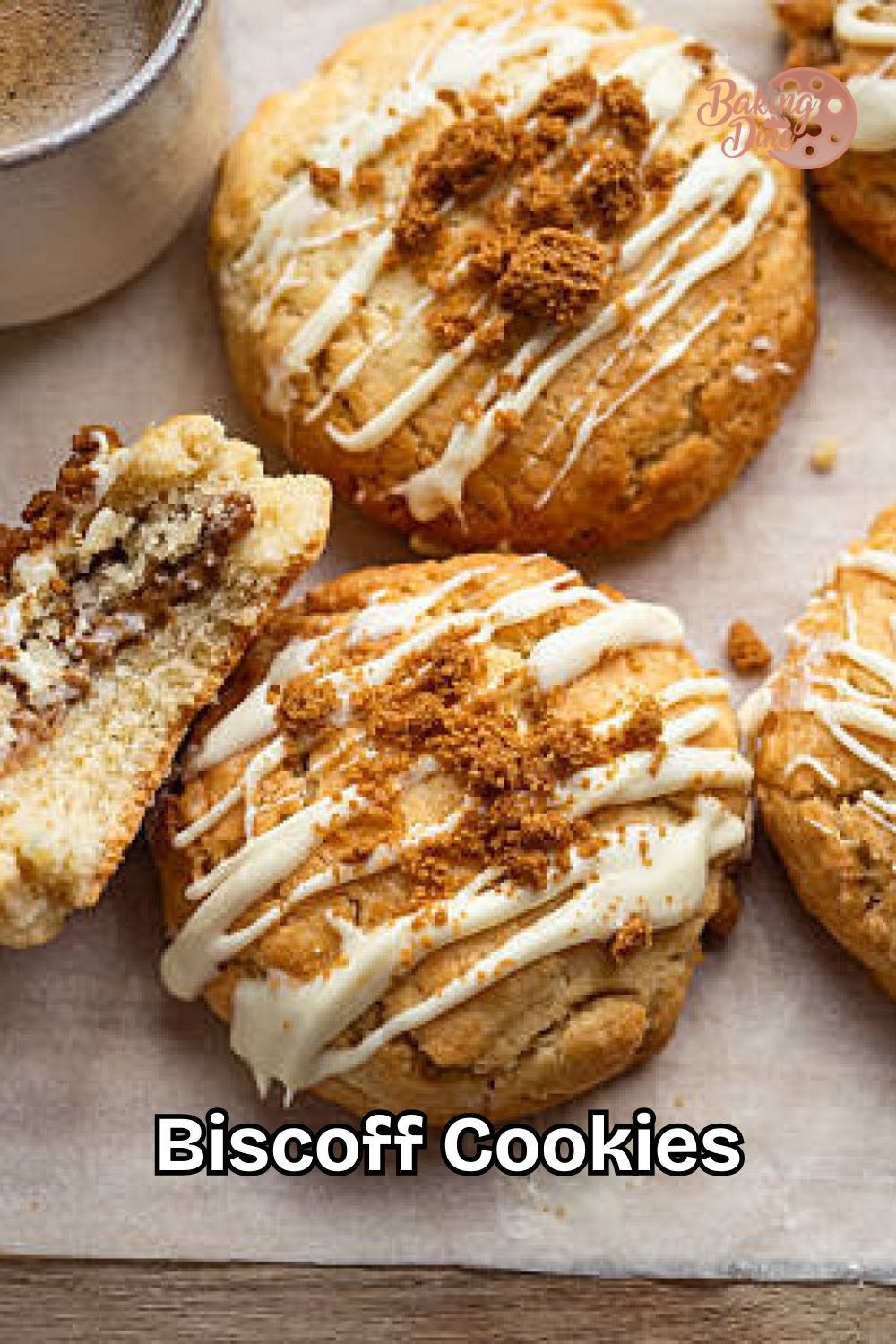
Biscoff Cookies
Ingredients
Method
- Freeze teaspoons of spread for 1 hour
- Beat butter
- Spread and sugars
- Add eggs and vanilla
- Mix in dry ingredients
- Old in biscuits and chips
- Chill 30 minutes
- Stuff 12 balls
- Bake at 350°F for 12-14 minutes